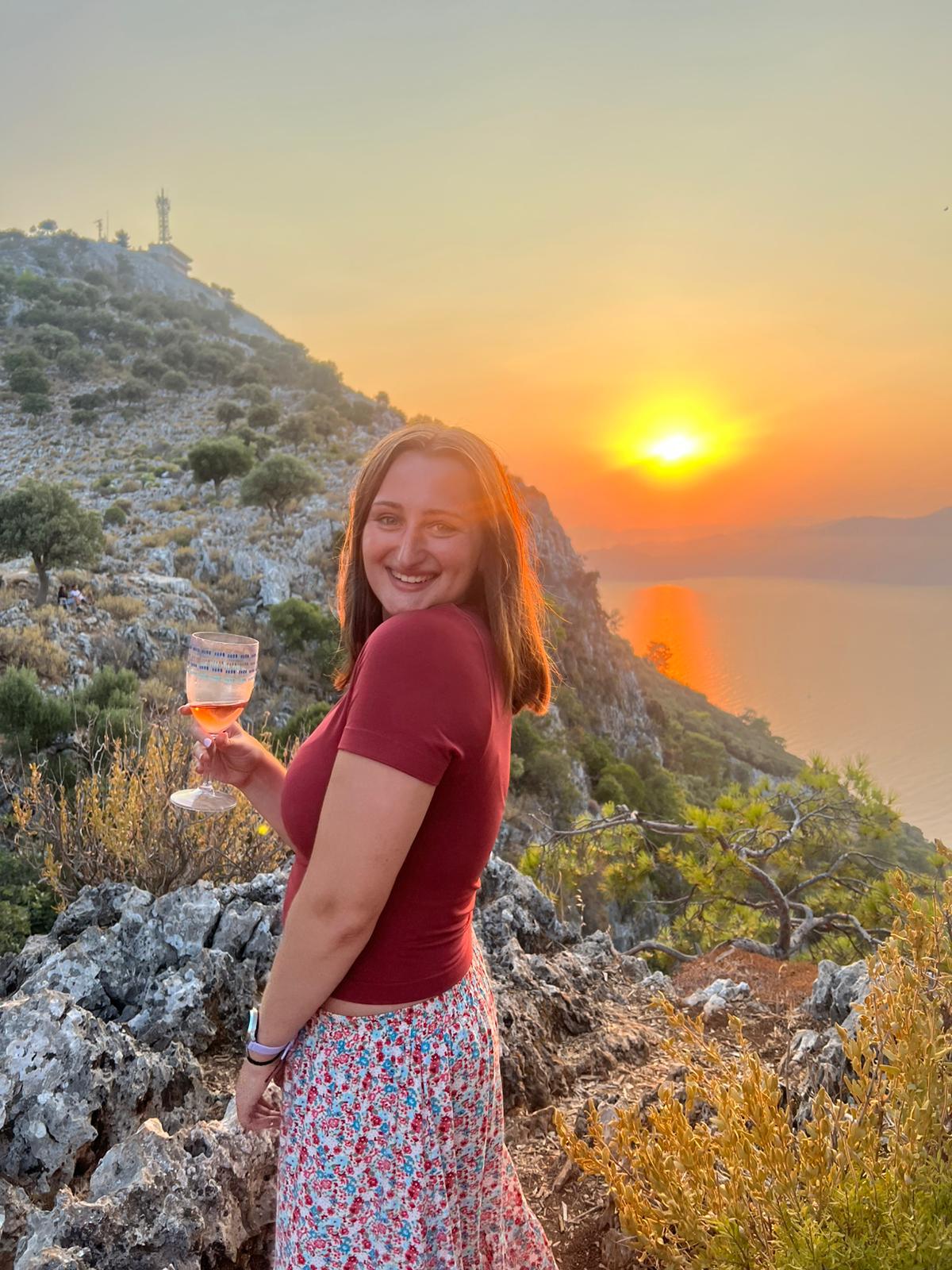
 Kayla Nemirovsky
UMBC Faculty-Led: Global Experiential Learning in MENA: Exploring Morocco
Majors: Mathematics and Financial Economics
Certificate: Honors College
Pre-Departure Post
Hi UMBC!
I’m back again for another series of Abroad Blogs! You might remember me from my faculty-led program in Cape Town, South Africa or my semester-long exchange in Tampere, Finland. This time, I am going to be going on a faculty-led program to Morocco! We will be traveling during Spring Break and will be going to tons of cities including Casablanca, Rabat, Fez, Chefchaouen, and Ain Cheggag in the Atlas Mountains! I am so excited for this trip!
Spring Break faculty-led programs are a little bit different than the summer faculty-led program that I did in 2023. The biggest difference is that they are part of a Spring Semester class. This class is about Arab culture. I chose to take it because Arab culture is something that I had a lot of assumptions about and I wanted to develop an honest understanding of it. Also, obviously, I wanted the chance to go to Morocco and interact with locals. For most of this trip, we are staying with homestay and Amazighi families, and I am looking forward to the chance to really immerse myself in the culture, not just view it from a hotel.
 We have spent the first part of the semester learning about different elements of culture that we will be interacting with once we arrive in Morocco. We also started an interview paper for which we will be meeting with university students in Morocco. We are meeting with students at two universities and we are paired with students at one of them for interviews. Last week, we met with our partners through Google Meet! My partner is named Wiam and she is 20 and studying to be an English teacher. We have tons of things in common, like we are both the oldest in our families and we like a lot of the same TV shows, like Bridgerton!

She is learning how to play piano, and she even played and sang Sailor Song! Lastly, she gave me some packing recommendations, like that I should definitely bring my jacket because it has been cold lately!
Speaking of packing, I have finally started putting together all of my clothes. For the last week, I have just had piles of “things to bring” scattered around my room. Now I finally took out my suitcase and backpack and have started putting things together. Since we all got a checked bag, our professor asked some people to take a pack of clothes that he has been collecting to donate to children while we are in Morocco. Originally I took a bag because I thought that I would have enough space. However, it turned out that my family does not have a suitcase in between carry-on and ginormous size, so I had to offload my pack of clothes to another student.
I am super excited to get on the flight on Friday! It’s only 7 hours, so not too bad. However, it’s through the night and we have a packed full next day, so I am hoping that I can sleep for most of it. Since this program is just a week, I am thinking that I can give a little summary of every day in my blogs, so stay tuned for the first half of our trip!
In-Country Post
Salam alaikum! Greetings from Morocco!
We have been in country for over half of the break, and it has already been an incredible experience! As promised, I have been keeping a daily log of what we’ve been doing and eating! I hope you enjoy reading about each day of our study abroad program! Fair warning, it is quite long and very detailed because we have done a lot and tried a ton of delicious food!
Day 1: Flight, Casablanca, and Rabat

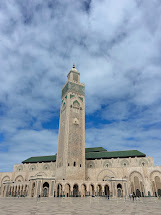 We left Maryland at around 9:45pm on Friday and had a seven hour flight to Casablanca, Morocco. When we arrived at Casablanca it was about 5am Maryland time, 9am Morocco time. Since we had an overnight flight, I slept the whole time and felt relatively well rested in the morning. Our professor, Samir El Omari, was waiting for us at the airport because he arrived a few days earlier. On the way from the airport to the homestay family house, we stopped at the Mosque of Hassan II. This Mosque was built by Mohammed V in his father’s name during the 1980s. It’s also called The People’s Mosque because everyone donated to help build the Mosque. The Mosque was absolutely beautiful! Everywhere you looked there were beautiful mosaic patterns and fountains. The Mosque is right on the ocean, so you could smell the water as you were walking around the courtyard. We couldn’t go inside of it if we were not Muslim, but some people in our class went inside to pray. We also heard the prayer call, the Adhaan, and watched as people arrived at the Mosque for the mid day prayers.

 Afterwards, we had about an hour and a half drive from the Mosque of Hassan II to our homestay family in Rabat. We had a whole class nap on the bus! When we arrived, they were waiting for us with mint tea and hameer amrang, which was a dough filled with chicken and was really good! Then we had some down time before we walked to an outdoor market in Rabat. That was a bit of an overwhelming experience! There were shops and vans all over the street selling food and clothing. In the streets there were cars, motorcycles, and people all yelling and honking at each other. It smelled like fish and oranges and our professor bought two different kinds of oranges for us to try later. When we returned to the house, it was time for those who were fasting for Ramadan to break their fasts. Since you don’t need to fast when you are traveling, because it can be exhausting and difficult to know what timing to follow, only one student and our professor were fasting today, but some more people will join them in the future. First, they broke fast with a date and a glass of milk or water. Then we all had baghrir, these pancake-like treats that we added warm butter and honey to. They also brought out harira, a traditional Berber soup. The Berbers were the local people to Morocco before Muslims arrived there. The soup was so good, it had chickpeas, lentils, and vermicelli in it and it was warm and filling.Then we had about an hour until performances and dinner! A music group came to the house that had lots of singing, drums, a trumpet, and cymbals. We moved the tables and sang and danced and they called us up individually and added our name into their singing. They were singing in Darija, which is the Moroccan dialect of Arabic.
After the first song, we pushed the tables back and enjoyed some tea and cookies. Then they were singing again and we were pushing the tables away to keep dancing! Then we had another meal with full chickens. We were served 8 full small chickens for 17 of us and we had no utensils. We used our hands to pull the chicken apart and eat it, which was a new experience. Then they brought out seffa, which is angel hair pasta with almonds, raisons, and powdered sugar. This they did give us utensils for and it was so good, like a sweet dessert.
Before bed, we decided that we should take some chicken bones and scraps outside for some of the neighborhood cats! There was a mama cat with her baby that came out and started nibbling on it as soon as we scattered them! Then it was time for 9 girls to share 1 bathroom and wash the airport and airplane out before bed. We ended up with a pretty efficient system with an order set and a max of 10 minutes for each person. By around 2am, we were all exhausted, ready for bed, and excited for the next day!
Day 2: Rabat


Today our professor let us sleep in a little bit and we didn’t need to be ready to go anywhere until 11am. Then we all got back into the bus and drove to downtown Rabat. First we went to the modern downtown area. We drove past the King’s Palace and then got out of the bus and walked to the Parliament building. Then we walked to the downtown Rabat area where there was a huge market, or souq. When I say huge, I mean gigantic! Every time we got to the end of a block or I thought it was ending, there were more stalls. There was traditional clothing, spices, fragrances, food stalls, leathers, bags, jewelry, and souvenirs! We spent over two hours walking through the market and shopping for gifts for ourselves and our friends and family back home. Then we had to rush out to make it home in time to go to a hammam!

Going into it, we were expecting that we would be going to a tourist geared hammam. I had been to a Turkish hammam before, but I had been warned that this would be different. We actually went to a community hammam. It was split with a male and a woman’s side. On the woman’s side, everyone was topless. The 7 girls in our program that went to the hammam decided that we were fully going to commit to this experience and decided to do it the same way. This was an interesting ice-breaker to say the least! When we went into the hammam, it was like a large cement hall with only one light. There were buckets filled with water and we came in with loofahs to scrub ourselves with. Pretty much all you could hear was water sloshing around as people were using little pails to rinse themselves with water from the bigger buckets. 3 of the workers there gave us Moroccan soap and we washed ourselves with it. Then they used the loofahs to scrub us and get rid of all our dead skin. Afterwards, they washed our hair and put a mud mask on us. After we left, we were all soft and exfoliated.
After the hammam, the people that were fasting broke their fast with dates and we had oatmeal and eggs. Then while we were waiting for our second course, we walked to a grocery store to get some snacks, napkins, and bottled water. Dinner here is a several hour long affair. We break fast, then there is about 2 hours until another course and then we get a third course! All the food is always really good, it’s just that the second course doesn’t start until about 10pm. On the way from the grocery store, we saw a little kid getting a haircut! Past 10pm! I was shocked. I think it’s mostly because of Ramadan, however nights here go really late. For dinner, we had delish turkey meatballs with potato salad and then cappuccino flan for dessert! The homestay family made our dinner again, and it is always so delicious! After dinner, we decided to take another walk so we walked around the neighborhood that we are staying in, and we got back to the house around midnight. There were still lots of people out and about in the city!
Day 3: Rabat
 This morning, Papa Samir, what we have started calling our Professor, was very insistent that we needed to be outside and ready at 10:30am because we had a tour at 11:00! We went to the National Museum of Adornment which had tons of beautiful Moroccan Muslim and Jewish jewelry. A lot of the jewelry was the kind that women were wearing during the 19th and 20th century for weddings. There were also lots of male adornments, which were usually daggers and decorated kaftans that people wore to show status and were different for different social classes. The museum was inside of the Sultan’s gardens and they had a lot of plants, trees, and fruits growing there.
 From the Museum, we went back to the souk because some people bought jewelry yesterday that they needed to get resized. I decided that I was going to buy a bag because when I was packing I didn’t leave a lot of space for purchases, but I didn’t bring a personal item for the flight. Now I have a bag that I will count as my personal item and I will fill with gifts and souvenirs! We also got some lunch in the market and I had a corn muffin and two briwate, one with chicken and one with seafood. From the souq, we walked to the Mausoleum of King Mohamed V and Minaret of Hassan. The Mausoleum was absolutely gorgeous. There was stained glass on the ceiling and mosaics all over the walls called zellig. In the middle there were marble caskets for King Mohamed V, King Hassan II, and the brother of King Hassan II who was a prince. The Minaret of Hassan is a tower that was built during the late 12th century and was going to be a centerpiece to a mosque. However, it was never finished after the caliph passed away and ended up being 44 meters instead of 80. It has remained unfinished, however it is a symbol of Rabat’s history and was designated as a UNESCO World Heritage site in 2012.
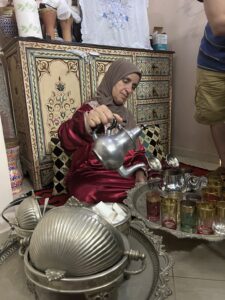 On the way back to the homestay, we stopped by a grocery store to get snacks for our drive tomorrow to go to Fes. While we were there, Papa Samir pointed out some green tea that was the same as the one the host family used to make tea. I bought three boxes of it to give as souvenirs to my family. Then we returned to the house and had about two hours of downtime before iftar (the meal to break fast). I took a fat nap, it was wonderful. After iftar, we had a tea making lesson. The homestay woman showed us how she rinses the tea, then adds mint and sugar, and mixes it together. While we were learning how to make tea, we also learned some Darija words. Mint is naenae, sugar is soucar, tea is atay, cup is kas, water is ma, and the tea tray is sinia. Then we had a quiz and we had to match the vocabulary!
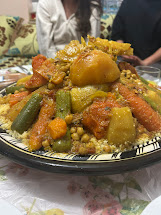 After the tea ceremony, most of us walked to a cafe on the corner of the street that has wifi to call our parents and get some work done. The house does not have wifi and gets very bad cell service, so this was the first time that I was able to call home. While we were sitting in the cafe, some of the girls went to get haircuts and they looked so good! We returned from the cafe at 10:15 thinking dinner had already been served, but we were wrong. They brought out dinner at around 10:30 and we got massive bowls of couscous, vegetables, and chicken! We all rallied, some more than others, and actually finished both of the bowls. The homestay family and Papa Samir were both shocked! Then for dessert we had oranges with cinnamon, which I’ve never had before but it is a delicious combination! After finishing all of the food, we decided that we needed to take another walk. We did a lap around the block and returned at about 1am. Then we packed up and got ready for bed because the next morning we were leaving Rabat to go to Fes!
Day 4: Fes and Ain Cheggag

 We woke up early and got on the bus to drive to Fes. The drive took about three hours, and most of us were sleeping the whole time. When we arrived in Fes, we met up with a local guide through the Ibn Ghazi Institute, which is our partner university for this program. While Rabat, where we spent the first few days of our trip, is the current administrative capital of Morocco, it only became so under French colonization. Before that, Fes was the administrative capital and it remains to be the cultural capital of the country. It has one of the oldest and largest Medinas, old towns, in the world. Our guide showed us the Royal Palace and Gardens, which used to house the King. Then we went to the souq. This one was mostly similar to the one in Rabat, but there were some key differences. For starters, it is just as long (honestly longer!), but it was narrower and everything seemed more squished together. It was also a little bit more touristy and there were some more food options available even though it is Ramadan. Inside of the souq there were schools, mosques, and temples.
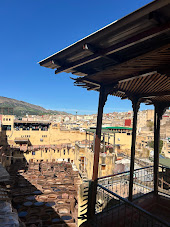
One of the temples is where one of the kings of Fes was buried. He was the youngest king, however he organized and structured the city during his rule. We also walked past Seqait Nejarine, which is a big trading hall. The Medina also houses the oldest university in the world, Al-Qarawiyyin University, which was started by a woman. On our way out of the Medina, we visited the Chaouwara Tannery. There we saw the whole process of cleaning, preparing, and dyeing leather. When we walked into the building, we were handed a handful of mint and we were all a little bit confused about why they were giving it to us. Once we walked in, we understood. The tanning process is quite stinky and we were given the mint to smell so that we would not be overwhelmed by the smell!

 When we left the Old Medina, we went to the Ibn Ghazi Institute for a lesson about Arabic calligraphy and music. The teacher only spoke in Arabic, so the director of the Institute and the daughter of the instructor were translating for us. He showed us different styles of calligraphy and said that the three main concepts of Arabic calligraphy are derivation, association, and harmony.
 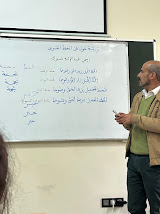 Depending on how closely you write the letters, how you combine them, and the different fonts you will get a different look. He wrote the same sentence in four different fonts on the board so that we could see the difference. Then he came around and wrote all of our names in Arabic! For the music lesson, he showed us how European music follows 2 scales, a major and a minor, but Arabic music has ten different scales that are combined together to express emotions and make the music interesting. There were four girls there who demonstrated how different scales sounded in song. Two of them were award winning for their recitations of the Quran and even though it’s not supposed to be done in song, it is supposed to be melodic. They ended the demonstration by reciting a verse and some of the Muslim people in our group said they were the best recitations they had ever heard.
 After the lessons, it was time to break fast! We were joined by first year students at the university. They were all mostly in preparatory programs for engineering that were focused on math, physics, and engineering. They had lessons in Arabic, English, and French. We informally conducted the first part of our interview with the students and I asked them about the Western media that they watch. We were at a table with two boys who mostly watched American sports. After we finished the meal, there was a traditional drumming group that performed for us and we danced together with all of the students for an hour! We all had a lot of fun together.
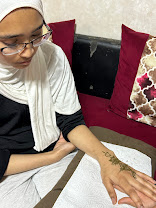 At 9:30, we left Fes to drive to an Amazighi homestay family in the Atlas Mountains. They live on a farm and as we were driving in we heard lots of dogs barking. When we arrived, all of the girls got henna done by one of the women in the house. One of our hands was done in a traditional Berber style with Berber symbols, while the other was done in a more traditional Arabic style. Then we ate a late, I mean really late at 12:30am, dinner of chicken noodle soup. They brought out a huge bowl with lots of spoons and we all just dug in, family style! It was a little bit tricky to eat with the drying henna on our hands, but we tried to keep it safe! After a long and packed day, I was ready to curl up and fall asleep. I think I was out first, before all the other girls had even stopped chatting!
Return Post
I’m going to hop right back in to going over my time in Morocco! For me, the second half of the trip seemed to be a little slower and more relaxed than the first one, which was more fast paced! Part of this may have been due to a few rainy days that we had at the end of the trip.
Day 5: Fes and Ain Cheggag
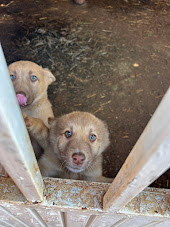
 Today we woke up in the morning and had breakfast with the homestay family. We walked around the farm a little bit and saw some of the animals that the family had. There were cats, dogs, puppies, chickens, roosters, turkeys, and sheep! The rooster even woke us up in the morning! Then we walked to the outdoor farmer’s market, where they were selling so many things! Typical farmer’s markets that I have been to before have had clothes, candy, toys, and fruits and vegetables. This market had all of those things, but also even more than that! There was a field in which they were selling doors. There were also chicken pens and I thought that they were being sold for eggs. However, I looked closer and realized that people were choosing their chickens and they were being killed and cleaned right there! At that moment, I was grateful that I had chosen a seafood lunch. At the market, we bought some strawberries and tried a nutty dessert. After the market, we walked over to a restaurant and had pastillas. We got to choose between chicken and seafood, and I had seafood. It had calamari and shrimp and I think vermicelli and it was really delicious!
 After lunch, we drove back to Fes and went back to the Ibn Ghazi Institute to meet with some elementary schoolers. We talked with them about American and Moroccan culture and they presented to us about Moroccan food, holidays, clothes, and culture. The group was split into a lower and higher ability group, but all the kids were between 9 and 13 years old. English is their third or fourth language, they have all learned or are learning Dirija, Modern Standard Arabic (MSA), and French. However, their English is so good, which is super impressive! Then we stopped by an Arabic Art museum, but we only had about 20 minutes there before it closed. The rooms were organized chronologically and had a timeline of Moroccan history going through them. There was also a pretty courtyard with plants and a fountain.
 On the way back to Ain Cheggag, we stopped at thermal pools. We weren’t sure if they were going to be open because of Eid al-Fitr coming up, but luckily they were! The thermal pools were similar to the hammam, except in the middle of the room there was a thermal pool that was similar to a jacuzzi. We were able to relax and enjoy the warm water. Then we drove back to the host family and those who were fasting broke fast with dates, soup, and pancake-like bread. There was a little girl at the homestay that I thought was the granddaughter of the people we were staying with, but it turned out that she was just a neighbor that was there for vacation and lived in Fes. I started playing patticake with her and I was teaching her some numbers in English. Then she was called to get dressed in her jileba, and she asked her mom (I think) if I could borrow one too! The family ended up lending all of the girls jilebas to wear for our traditional dinner! It started with Ahidouce drumming, which is traditional Amazighi drumming and dancing. There were three rounds of performances before dinner, broken up by tea and cookies. I kept playing and dancing with the little girl for a few hours, and my arms were completely tired by the end of the night from carrying her. Then around midnight, it was time for the dinner meal. We had whole chickens again that were stuffed with noodles and lots of spices. Then for the second course we had couscous, but it was different from the one we had in Rabat. This one was more plain and we added milk to it to make it more creamy and dessert-like. When we finished eating, we had one more round of music and dancing before the drummers left and we got ready for bed. We were all tired by around 1:30 am, but Papa Samir said that usually this can go on for hours until the sun rises!
Day 6: Chefchaouen and Martil
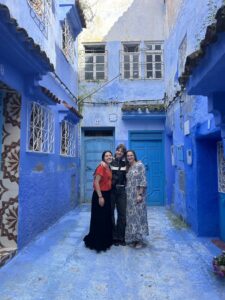 We woke up around 8 am, but after a full night of eating most of us were not hungry for breakfast. We hit the road around 9 because we had a 4ish hour drive to Chefchaouen. Chefchaouen, also known as the blue pearl city, is in the heart of the Atlas Mountains and was built as a fortress to protect from the Spanish and Portuguese in the North. Chefchaouen means “Look, there are two horns” and the horns are two peaks of the mountains. After the Inquisition, lots of Jews and Muslims came to Morocco and a group of Jews settled in Chefchaouen. They painted part of the city blue to connect with divinity. Over time, the blue color has spread all over the city and it has become a major tourism spot within Morocco. We walked around and above the city and took lots of pictures in the beautiful blue streets!
 After a few hours in Chefchaouen, we got back on the road and drove to Tetouan, where we got dinner. I had a seafood tagine with shrimp, calamari, and fish that was really good! While we were eating dinner, we found out that Eid was going to be the next day! The reason we didn’t know exactly when it would be was because the Arabic calendar and holidays follow the lunar cycle. We had a general idea of when it would be, but didn’t know if it would be Thursday, Friday, or Saturday. People were waiting for the experts to say on which day the moon would be at a crescent to celebrate Eid. This kind of brought us into a havoc because most things would be closed in the morning while people prayed and had breakfast with their families. This included our tour guide for the following day in Tetouan. We decided that we would stop at the grocery store and get snacks and food to make a big breakfast in the morning since in Martil we were staying in apartments that had kitchens. We were worried that the store would be packed, like the way Costco is packed before a holiday or a storm, but it was okay. In addition, the morning of Day 7 was when we were supposed to meet with the students we connected with virtually before coming to conduct interviews for our comparative analysis project. Since they would be celebrating the holiday, we were unable to meet with them. This was slightly disappointing, but we will still connect with them virtually when we return to ask our interview questions.
When we arrived at our apartments, the weather was unfortunately not the sunny Moroccan weather that he had gotten used to. It was 10pm and dark, windy, and rainy. One of the keys wasn’t working for the girl’s apartment so we all had to sit in the other one until they found someone who could unlock another room for us, which happened around 12:30am. After a long day, we wanted to take warm showers but we realized that the heater was not plugged in! We plugged the heater in, planned to take warm showers in the morning, and went to bed!
Day 7: Martil, Tetouan, and Eid Al-fitr

Today was the day that I had my takeover on the UMBC life page! I shared a general overview of this program and shared a day-in-the-program on the stories! You can still find the main posts on the feed and the stories saved in highlights on the profile page.
In the morning, it was still wet and rainy. We had discussed walking to a mosque so that Muslim students could pray and non-Muslim students could experience this important religious and cultural event, however because of the weather that did not end up happening. Instead, we woke up around 10am and celebrated the second half of Eid morning – a big family breakfast! We cooked eggs, heated up toast and croissants, and cut up fruits. We had a pretty impressive spread by the end, and we all enjoyed a nice group breakfast. Since the girls did most of the cooking, we obviously had to let the boys do most of the clean up!
 While our tour guide was celebrating Eid with his family, we had some free time. Most of the group decided that we would walk down the street to Martil Beach. It was mostly windy and cold, but we did write out UMBC in the sand and enjoyed some fresh air! Then we got back on the bus for a tour of the 7 gates of Tetouan. Tetouan is another fortress city that is categorized by its many fountains throughout the city! It is a UNESCO World Heritage site and is a city in which Jewish, Muslim, and Christian people flourished at points throughout history.

The seven gates all have different names, which are Bab Okla, Bab Saida, Bab Sefli, Bab Mkabar, Bab Noudader, Bab Tout, and Bab Rmouz. All of the names are connected to uses of the gate, such as the entrance to the Jewish Quarter, the exit to the Muslim cemetery, and a place where traders would stack their goods when they brought them to the city. The more modern part of Tetouan has Spanish influence in the architecture from when the Spanish were in the city. There is also a Spanish-style church.
For dinner, we stopped by a chicken place where I had a delicious schwarma and then we got some gelato! When we returned to the apartment, the weather was nice so we decided to take a night stroll all together! We walked down the boardwalk of Martil and even made it all the way down to the restaurant we had dinner in yesterday! Then most of us all met up in one of the apartments to watch Pirates of the Caribbean. It has been so fun getting to know this group of people! Even though it is my last undergrad semester at UMBC, I hadn’t met any of them before. Everyone has different majors, interests, and experiences, and it has been really cool seeing how they can all come together!
Day 8: Ain Lahcen and Rabat
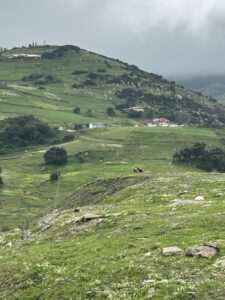 Originally, we had planned to have the morning at the Martil Beach and head back to Rabat in the early afternoon. However, because the weather was still a little bit cold and people wanted to finish up their souvenir shopping at the souk in Rabat, we all teamed up to ask him if we could leave Martil earlier than planned. We got on the bus around 10:30am and stopped in Ain Lahcen for lunch, where there was a beautiful mountain view. By the time we got back to Rabat, we only had about 25 minutes to do some last minute shopping. I got myself a shot glass because I collect them from all the countries I travel to, and some magnets to give out to family and friends.
 Then we drove back to the same home stay family that we stayed with in Rabat! For dinner, we had a really big pastilla with chicken and almonds, as well as more mint tea! We came to the conclusion that the best mint tea that we had over the whole trip was at this homestay. In general, I think that we had a better culinary experience staying in homestays than we would have going to restaurants. We got to try traditional family recipes and traditional Moroccan flavors! We liked them so much that we even asked if the recipes could be written down for us so that we could try to replicate them at home! I’m excited to keep some Moroccan flavor in my life!
To end off the trip, we had a women’s Houariat folklore group perform for the trip! We got to experience so much music and drumming throughout the trip, but up until tonight it was always men. This was a great experience to see how women played a role in Moroccan music. There was a lot of dancing and laughing and we ended the trip on a great note! After the performance, we thought that we would walk back to the cafe that we were in at the beginning of the trip to connect to wifi.

It was around the same time as when we went before, but this time the cafe was closed! With Ramadan over, it became more apparent how during Ramadan the cities are alive at night, but this is not the norm. We ended up finding a smaller cafe down the street and a group of students decided to just walk back to the house.When we came back 45 minutes later, they were still outside and one of my friends had a tiny kitten sleeping in her lap! I have been a little wary about touching street animals during this trip because I am a little paranoid, but this kitten was so cute! We had a lot of trouble getting it off of my friend when it was time for us to leave. The other students were talking and playing soccer with two kids that lived across the street. They really showed us what Moroccan hospitality looks like – they gave us clips and then their dad brought us a box of cookies.
When we made it back to the room and started packing and chatting, we realized that the clocks jumped from 1:59am to 3am, and we definitely hadn’t talked for an hour! That’s when I remembered that the United States changes the clocks for Daylight Savings a few weeks before that happens in Europe, and evidently in Morocco! After grumbling about how we somehow managed to lose an hour of sleep twice this year, we finished packing and went to sleep for our last night in Morocco.
Day 9: Flying Home
 And just like that, our trip came to an end. We all enjoyed one final breakfast at the home stay, and then got on the bus to the airport. The flight back was during the day and we arrived back in Washington D.C. around 7:30pm, so I didn’t want to sleep on the plane so that I could get sleep during the night and readjust to Maryland time. On the flight I worked on finishing my blogs and did some homework and studied for an exam that I have on Tuesday!
This Spring Break Faculty-Led Program has been a wonderful way to spend my senior year spring break! I got to know a whole new group of people and experience a new culture. Morocco is a beautiful country, and there is still so much more of it for me to see! On this program, we stayed in the north of Morocco, but there is much to explore in the South, like Marrakesh and the desert. I definitely want to come back one day!
The most difficult part of this program is that we jump right back into the semester. We all had to spend the flight home working on assignments and studying for midterm exams. When I came back from my exchanges in South Africa and Finland, I had some time to readjust to being back in the U.S. before school picked up again, but now I am jumping back in! Nevertheless, I wouldn’t have wanted to spend my Spring Break in any other way! Thank you for following along on my blog, I hope you enjoyed learning about Morocco and this program! There are tons of faculty-led programs available during the Summer, Winter, and Spring Break that are a fantastic way to get to know people on campus and learn about a new part of the world. I highly recommend you find one that’s a good fit for you!